Domain freeblogs.de kaufen?
Wir ziehen mit dem Projekt
freeblogs.de um.
Sind Sie am Kauf der Domain
freeblogs.de interessiert?
domain@kv-gmbh.de · 0541-91531010
Domain freeblogs.de kaufen?
Ist die folgende Relation transitiv?
Um diese Frage zu beantworten, müsste die gegebene Relation gegeben sein. Ohne die spezifische Relation kann ich nicht sagen, ob sie transitiv ist oder nicht. **
Wenn r und s transitiv sind, dann ist die Relation r n s auch transitiv.
Wenn r und s transitiv sind, bedeutet das, dass für alle Elemente a, b, c gilt: Wenn (a, b) ∈ r und (b, c) ∈ r, dann folgt (a, c) ∈ r. Wenn (a, b) ∈ s und (b, c) ∈ s, dann folgt (a, c) ∈ s. Da r und s transitiv sind, gilt dies auch für die Relation r n s, da für alle Elemente a, b, c gilt: Wenn (a, b) ∈ r n s und (b, c) ∈ r n s, dann folgt (a, c) ∈ r n s. Daher ist die Relation r n s auch transitiv. **

Ähnliche Suchbegriffe für Transitiv
Top-Angebote
Produkte zum Begriff Transitiv:
-
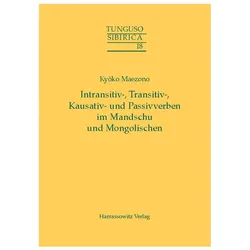
Intransitiv-, Transitiv-, Kausativ- und Passivverben im Mandschu und Mongolischen, Taschenbuch von Kyoko Maezono, Harrassowitz, 978-3-447-05360-0Intransitiv-, Transitiv-, Kausativ- Und Passivverben Im Mandschu Und Mongolischen, Taschenbuch Von Kyoko Maezono, Harrassowitz, 978-3-447-05360-0, Seitenanzahl: 16258,00 €*Versand: 0,00 €Sichere Weiterleitung zum Anbieter
-
Raue, Benjamin: Act on Copyright Content Sharing Service ProvidersAct on Copyright Content Sharing Service Providers , The Book The Urheberrechts-Diensteanbieter-Gesetz (UrhDaG) is the German implementation of the controversial Art. 17 Directive 2019/790 (Copyright in the Digital Single Market, DSDM). Germany has decided against a minimum effort implementation and resisted the temptation to just incorporate the wording of the Directive more or less literally into the German Copyright Act (UrhG). Instead, it has opted for a comprehensive implementation in a stand-alone act, including: an extensive definition of an OCSSP with a safe-harbour clause for excluded service providers a detailed provision specifying the obligation to acquire contractual rights of use several provisions on direct remuneration for authors, performers and photographers very detailed provisions balancing between the obligation to preventively block copyright infringing material and the users' rights to freedom of expression and information which more or less anticipated (and likely influenced) the CJEU's decision Poland/Parliament and Council, including a section on uses presumably authorised by law a redress system consisting of complaints procedures and an alternative dispute resolution mechanism detailed obligations for measures against abuse rights of information for rightholders and for the purpose of scientific research The commentary of each article is headed by the current version of the article both in the German original and an English translation followed by a clearly and uniformly structured analysis of the provision including the extensive (academic) discussion that accompanied the implementation procedure. The interplay of the UrhDaG with the German Copyright Act is addressed as well as the respective requirements of the DSMD. The impact of the CJEU's first decision on Art. 17 DSDM (Poland/Parliament and Council) is discussed in the relevant provisions. As Art. 17 DSDM has been implemented very heterogeneously in the Member States, further decisions of the CJEU are to be expected. The detailed German implementation might serve as a reference and source of inspiration for the further specification of Art. 17 DSDM. The commentary aims to meet the expectations both of German and foreign lawyers interested in platform regulation and copyright by providing a detailed explanation both of the German implementation and, by that, of Art. 17 DSMD. The Advantages at a Glance Article-by-Article Commentary in English language clearly and uniformly structured analysis of each provision The Target Group For German and foreign Copyright lawyers. , Tagfahrleuchten > Beleuchtung , Auflage: 1. Auflage, Erscheinungsjahr: 20240527, Produktform: Kartoniert, Autoren: Raue, Benjamin~Specht-Riemenschneider, Louisa, Auflage: 24001, Auflage/Ausgabe: 1. Auflage, Seitenzahl/Blattzahl: 170, Keyword: Content Sharing; Copyright; Service Providers, Fachschema: Handelsrecht~Unternehmensrecht~Wettbewerbsrecht - Wettbewerbssache, Warengruppe: HC/Handels- und Wirtschaftsrecht, Arbeitsrecht, Fachkategorie: Gesellschafts-, Handels- und Wettbewerbsrecht, allgemein, UNSPSC: 49019900, Warenverzeichnis für die Außenhandelsstatistik: 49019900, Verlag: C.H. Beck, Verlag: C.H. Beck, Verlag: Verlag C.H. Beck oHG, Blätteranzahl: 184 Blätter, Länge: 239, Breite: 160, Höhe: 13, Gewicht: 368, Produktform: Kartoniert, Genre: Sozialwissenschaften/Recht/Wirtschaft, Genre: Sozialwissenschaften/Recht/Wirtschaft,90,00 €*Versand: 0,00 €Sichere Weiterleitung zum Anbieter
-
DAS PERFEKTE ONLINE MARKETING KONZEPT FÜR COACHES - WEBSITE, SOCIAL MEDIA, CONTENT MARKETING, FUNNEL, Gebundene Ausgabe von Sonja Kreye, Tredition,Das Perfekte Online Marketing Konzept Für Coaches - Website, Social Media, Content Marketing, Funnel, Gebundene Ausgabe Von Sonja Kreye, Tredition, 978-3-347-14074-5, Seitenanzahl: 12416,90 €*Versand: 0,00 €Sichere Weiterleitung zum Anbieter



-
Ist diese Relation symmetrisch und transitiv?
Um zu bestimmen, ob eine Relation symmetrisch ist, müssen wir überprüfen, ob für jedes Paar (a, b) in der Relation auch das Paar (b, a) in der Relation enthalten ist. Um zu überprüfen, ob eine Relation transitiv ist, müssen wir überprüfen, ob für jedes Paar (a, b) und (b, c) in der Relation auch das Paar (a, c) in der Relation enthalten ist. Ohne weitere Informationen über die spezifische Relation kann ich keine definitive Antwort geben. **
-
Warum ist diese Relation nicht transitiv?
Eine Relation ist transitiv, wenn für jedes Paar von Elementen (a, b) und (b, c) in der Relation auch das Paar (a, c) in der Relation enthalten ist. Wenn dies nicht der Fall ist, ist die Relation nicht transitiv. **
-
Ist die Äquivalenzrelation transitiv bei zwei Elementen?
Ja, die Äquivalenzrelation ist transitiv bei zwei Elementen. Wenn zwei Elemente in einer Äquivalenzrelation stehen und das erste Element auch mit einem dritten Element in Relation steht, dann steht das zweite Element auch mit dem dritten Element in Relation. **
-
Ist die Relation reflexiv, symmetrisch und transitiv?
Um zu überprüfen, ob eine Relation reflexiv ist, muss man prüfen, ob jedes Element der Menge in Relation zu sich selbst steht. Eine Relation ist symmetrisch, wenn für jedes Paar von Elementen (a, b) in der Relation auch das Paar (b, a) in der Relation steht. Eine Relation ist transitiv, wenn aus (a, b) und (b, c) in der Relation folgt, dass auch (a, c) in der Relation steht. Um zu bestimmen, ob eine Relation reflexiv, symmetrisch und transitiv ist, müssen alle diese Eigenschaften einzeln überprüft werden. **

Ist "hinken" im Akkusativ transitiv oder intransitiv?
"Hinken" ist intransitiv, da es keine direkte Objekte erfordert. Es beschreibt eine Bewegung oder Aktion, bei der eine Person oder ein Tier mit einer Beeinträchtigung oder Schwierigkeit geht oder sich fortbewegt. **
Was ist transitiv und intransitiv im Fach Italienisch?
In der italienischen Grammatik bezieht sich transitiv auf Verben, die ein direktes Objekt erfordern, während intransitiv sich auf Verben bezieht, die kein direktes Objekt haben. Ein transitives Verb erfordert also ein direktes Objekt, das direkt vom Verb betroffen ist, während ein intransitives Verb kein direktes Objekt hat und sich auf den Subjekt bezieht. **
Top-Angebote
Produkte zum Begriff Transitiv:
-
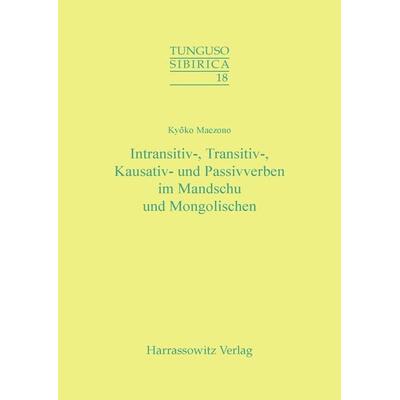
Intransitiv-, Transitiv-, Kausativ- und Passivverben im Mandschu und Mongolischen, Sprachbücher von Kyoko MaezonoDas Buch "Intransitiv-, Transitiv-, Kausativ- und Passivverben im Mandschu und Mongolischen" bietet eine umfassende Analyse der verbalen Strukturen in zwei eng verwandten Sprachen, die beide zu den altaischen Sprachen zählen. Es untersucht die Bildung und Verwendung von Intransitiv-, Transitiv-, Kausativ- und Passivverben im Mandschu und Mongolischen und beleuchtet die typologischen Gemeinsamkeiten und Unterschiede zwischen diesen Sprachen. Die Autorin Kyoko Maezono nutzt als Hauptquellen das historische Werk "Man-jou Shih-lu" sowie dessen mongolische Übersetzung, um die sprachlichen Phänomene detailliert darzustellen. Dieses Buch richtet sich an Linguisten, Sprachwissenschaftler und alle, die sich für die Struktur und Entwicklung dieser agglutinierenden Sprachen interessieren. Es bietet wertvolle Einblicke in die Wortbildung und Satzstruktur und trägt zur Diskussion über die sprachhistorischen Beziehungen zwischen Mandschu und Mongolisch bei.58,00 €*Versand: 0,00 €Sichere Weiterleitung zum Anbieter
-
Harrassowitz Intransitiv-, Transitiv-, Kausativ- und Passivverben im Mandschu und Mongolischen (Deutsch, Kyoko Maezono) (55846501)Harrassowitz Intransitiv-, Transitiv-, Kausativ- und Passivverben im Mandschu und Mongolischen (Deutsch, Kyoko Maezono) (55846501)58,00 €*Versand: 0,00 €Sichere Weiterleitung zum Anbieter
-
Intransitiv-, Transitiv-, Kausativ- und Passivverben im Mandschu und Mongolischen, Taschenbuch von Kyoko Maezono, Harrassowitz, 978-3-447-05360-0Intransitiv-, Transitiv-, Kausativ- Und Passivverben Im Mandschu Und Mongolischen, Taschenbuch Von Kyoko Maezono, Harrassowitz, 978-3-447-05360-0, Seitenanzahl: 16258,00 €*Versand: 0,00 €Sichere Weiterleitung zum Anbieter
-
Raue, Benjamin: Act on Copyright Content Sharing Service ProvidersAct on Copyright Content Sharing Service Providers , The Book The Urheberrechts-Diensteanbieter-Gesetz (UrhDaG) is the German implementation of the controversial Art. 17 Directive 2019/790 (Copyright in the Digital Single Market, DSDM). Germany has decided against a minimum effort implementation and resisted the temptation to just incorporate the wording of the Directive more or less literally into the German Copyright Act (UrhG). Instead, it has opted for a comprehensive implementation in a stand-alone act, including: an extensive definition of an OCSSP with a safe-harbour clause for excluded service providers a detailed provision specifying the obligation to acquire contractual rights of use several provisions on direct remuneration for authors, performers and photographers very detailed provisions balancing between the obligation to preventively block copyright infringing material and the users' rights to freedom of expression and information which more or less anticipated (and likely influenced) the CJEU's decision Poland/Parliament and Council, including a section on uses presumably authorised by law a redress system consisting of complaints procedures and an alternative dispute resolution mechanism detailed obligations for measures against abuse rights of information for rightholders and for the purpose of scientific research The commentary of each article is headed by the current version of the article both in the German original and an English translation followed by a clearly and uniformly structured analysis of the provision including the extensive (academic) discussion that accompanied the implementation procedure. The interplay of the UrhDaG with the German Copyright Act is addressed as well as the respective requirements of the DSMD. The impact of the CJEU's first decision on Art. 17 DSDM (Poland/Parliament and Council) is discussed in the relevant provisions. As Art. 17 DSDM has been implemented very heterogeneously in the Member States, further decisions of the CJEU are to be expected. The detailed German implementation might serve as a reference and source of inspiration for the further specification of Art. 17 DSDM. The commentary aims to meet the expectations both of German and foreign lawyers interested in platform regulation and copyright by providing a detailed explanation both of the German implementation and, by that, of Art. 17 DSMD. The Advantages at a Glance Article-by-Article Commentary in English language clearly and uniformly structured analysis of each provision The Target Group For German and foreign Copyright lawyers. , Tagfahrleuchten > Beleuchtung , Auflage: 1. Auflage, Erscheinungsjahr: 20240527, Produktform: Kartoniert, Autoren: Raue, Benjamin~Specht-Riemenschneider, Louisa, Auflage: 24001, Auflage/Ausgabe: 1. Auflage, Seitenzahl/Blattzahl: 170, Keyword: Content Sharing; Copyright; Service Providers, Fachschema: Handelsrecht~Unternehmensrecht~Wettbewerbsrecht - Wettbewerbssache, Warengruppe: HC/Handels- und Wirtschaftsrecht, Arbeitsrecht, Fachkategorie: Gesellschafts-, Handels- und Wettbewerbsrecht, allgemein, UNSPSC: 49019900, Warenverzeichnis für die Außenhandelsstatistik: 49019900, Verlag: C.H. Beck, Verlag: C.H. Beck, Verlag: Verlag C.H. Beck oHG, Blätteranzahl: 184 Blätter, Länge: 239, Breite: 160, Höhe: 13, Gewicht: 368, Produktform: Kartoniert, Genre: Sozialwissenschaften/Recht/Wirtschaft, Genre: Sozialwissenschaften/Recht/Wirtschaft,90,00 €*Versand: 0,00 €Sichere Weiterleitung zum Anbieter
-
Ist die folgende Relation transitiv?
Um diese Frage zu beantworten, müsste die gegebene Relation gegeben sein. Ohne die spezifische Relation kann ich nicht sagen, ob sie transitiv ist oder nicht. **
-
Wenn r und s transitiv sind, dann ist die Relation r n s auch transitiv.
Wenn r und s transitiv sind, bedeutet das, dass für alle Elemente a, b, c gilt: Wenn (a, b) ∈ r und (b, c) ∈ r, dann folgt (a, c) ∈ r. Wenn (a, b) ∈ s und (b, c) ∈ s, dann folgt (a, c) ∈ s. Da r und s transitiv sind, gilt dies auch für die Relation r n s, da für alle Elemente a, b, c gilt: Wenn (a, b) ∈ r n s und (b, c) ∈ r n s, dann folgt (a, c) ∈ r n s. Daher ist die Relation r n s auch transitiv. **
-
Ist diese Relation symmetrisch und transitiv?
Um zu bestimmen, ob eine Relation symmetrisch ist, müssen wir überprüfen, ob für jedes Paar (a, b) in der Relation auch das Paar (b, a) in der Relation enthalten ist. Um zu überprüfen, ob eine Relation transitiv ist, müssen wir überprüfen, ob für jedes Paar (a, b) und (b, c) in der Relation auch das Paar (a, c) in der Relation enthalten ist. Ohne weitere Informationen über die spezifische Relation kann ich keine definitive Antwort geben. **
-
Warum ist diese Relation nicht transitiv?
Eine Relation ist transitiv, wenn für jedes Paar von Elementen (a, b) und (b, c) in der Relation auch das Paar (a, c) in der Relation enthalten ist. Wenn dies nicht der Fall ist, ist die Relation nicht transitiv. **
Ähnliche Suchbegriffe für Transitiv
-
DAS PERFEKTE ONLINE MARKETING KONZEPT FÜR COACHES - WEBSITE, SOCIAL MEDIA, CONTENT MARKETING, FUNNEL, Gebundene Ausgabe von Sonja Kreye, Tredition,Das Perfekte Online Marketing Konzept Für Coaches - Website, Social Media, Content Marketing, Funnel, Gebundene Ausgabe Von Sonja Kreye, Tredition, 978-3-347-14074-5, Seitenanzahl: 12416,90 €*Versand: 0,00 €Sichere Weiterleitung zum Anbieter
-
Ist die Äquivalenzrelation transitiv bei zwei Elementen?
Ja, die Äquivalenzrelation ist transitiv bei zwei Elementen. Wenn zwei Elemente in einer Äquivalenzrelation stehen und das erste Element auch mit einem dritten Element in Relation steht, dann steht das zweite Element auch mit dem dritten Element in Relation. **
-
Ist die Relation reflexiv, symmetrisch und transitiv?
Um zu überprüfen, ob eine Relation reflexiv ist, muss man prüfen, ob jedes Element der Menge in Relation zu sich selbst steht. Eine Relation ist symmetrisch, wenn für jedes Paar von Elementen (a, b) in der Relation auch das Paar (b, a) in der Relation steht. Eine Relation ist transitiv, wenn aus (a, b) und (b, c) in der Relation folgt, dass auch (a, c) in der Relation steht. Um zu bestimmen, ob eine Relation reflexiv, symmetrisch und transitiv ist, müssen alle diese Eigenschaften einzeln überprüft werden. **
-
Ist "hinken" im Akkusativ transitiv oder intransitiv?
"Hinken" ist intransitiv, da es keine direkte Objekte erfordert. Es beschreibt eine Bewegung oder Aktion, bei der eine Person oder ein Tier mit einer Beeinträchtigung oder Schwierigkeit geht oder sich fortbewegt. **
-
Was ist transitiv und intransitiv im Fach Italienisch?
In der italienischen Grammatik bezieht sich transitiv auf Verben, die ein direktes Objekt erfordern, während intransitiv sich auf Verben bezieht, die kein direktes Objekt haben. Ein transitives Verb erfordert also ein direktes Objekt, das direkt vom Verb betroffen ist, während ein intransitives Verb kein direktes Objekt hat und sich auf den Subjekt bezieht. **
* Alle Preise verstehen sich inklusive der gesetzlichen Mehrwertsteuer und ggf. zuzüglich Versandkosten. Die Angebotsinformationen basieren auf den Angaben des jeweiligen Shops und werden über automatisierte Prozesse aktualisiert. Eine Aktualisierung in Echtzeit findet nicht statt, so dass es im Einzelfall zu Abweichungen kommen kann. ** Hinweis: Teile dieses Inhalts wurden von KI erstellt.